 English
 Español
  Português
  русский
  Français
  日本語
日本語  Deutsch
  tiếng Việt
  Italiano
  Nederlands
  ภาษาไทย
  Polski
  한국어
한국어  Svenska
  magyar
  Malay
Malay  বাংলা ভাষার
  Dansk
Dansk  Suomi
Suomi  हिन्दी
  Pilipino
  Türkçe
  Gaeilge
  العربية
  Indonesia
  Norsk
Norsk  تمل
تمل  český
český  ελληνικά
  український
  Javanese
  فارسی
فارسی  தமிழ்
தமிழ்  తెలుగు
  नेपाली
  Burmese
  български
  ລາວ
ລາວ  Latine
  Қазақша
  Euskal
  Azərbaycan
  Slovenský jazyk
  Македонски
  Lietuvos
  Eesti Keel
  Română
  Slovenski
  मराठी
मराठी  Srpski језик


How Does a Lowbed Trailer Improve Heavy Haul Transportation Efficiency?
Abstract
Transporting oversized and heavy cargo presents persistent challenges across construction, mining, energy, and infrastructure sectors. Height restrictions, weight distribution, road regulations, and loading safety are frequent concerns for logistics planners and fleet operators. This article provides a comprehensive explanation of how a Lowbed Trailer addresses these challenges through structural design, load optimization, and operational flexibility. By examining technical characteristics, application scenarios, selection criteria, and maintenance considerations, this guide helps decision-makers understand how Lowbed Trailers deliver safer, more efficient, and compliant heavy haul solutions.
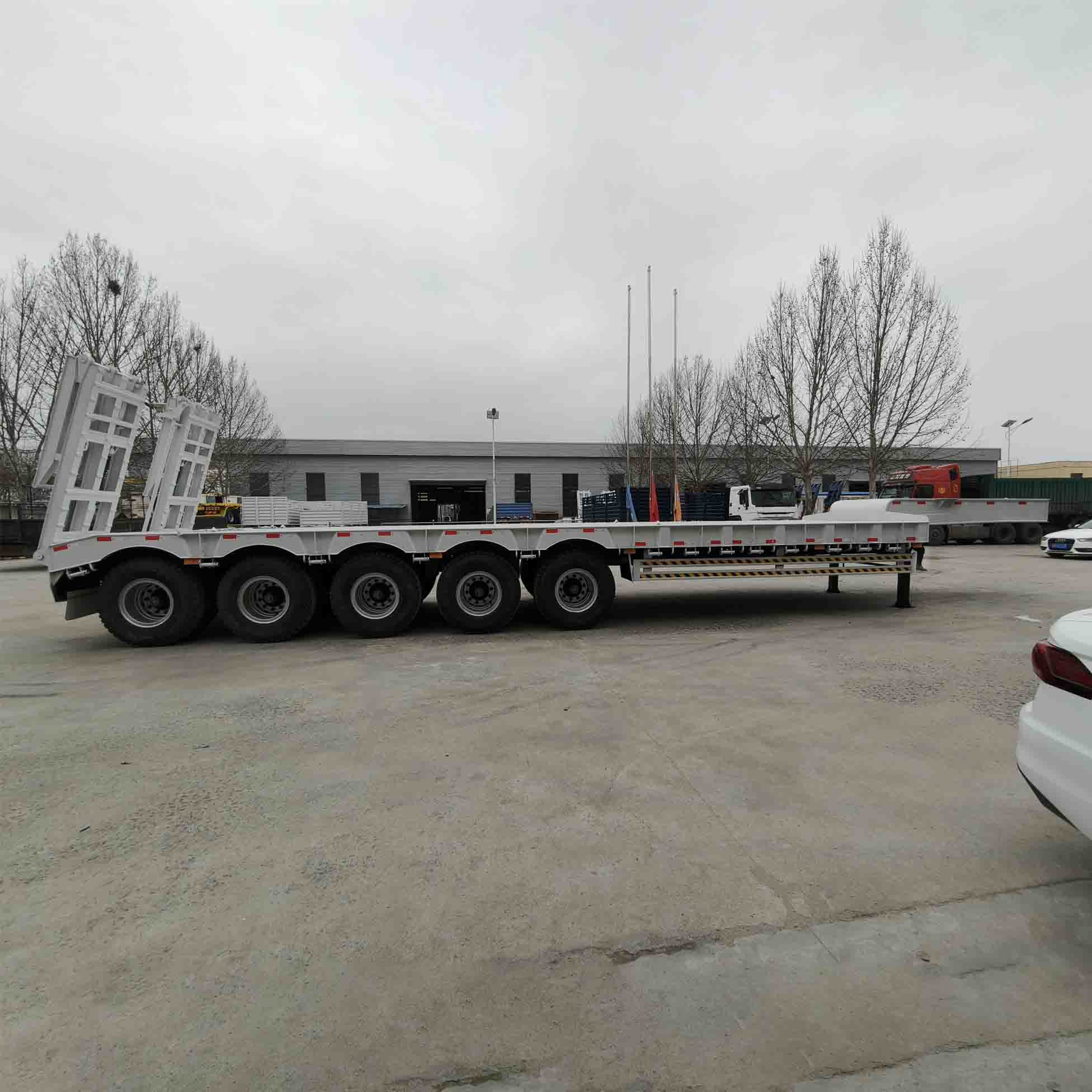
Table of Contents
- Understanding Lowbed Trailer Fundamentals
- Why Standard Trailers Fail in Heavy Haul Operations
- Key Structural Features of a Lowbed Trailer
- Operational Advantages in Real-World Applications
- Common Industries That Rely on Lowbed Trailers
- How to Select the Right Lowbed Trailer Configuration
- Safety, Compliance, and Load Stability
- Maintenance and Long-Term Value Considerations
- Frequently Asked Questions
- Conclusion and Next Steps
Understanding Lowbed Trailer Fundamentals
A Lowbed Trailer, also referred to as a lowboy trailer, is a specialized transport vehicle engineered to carry extremely heavy or tall cargo that exceeds the limits of conventional flatbed trailers. Its defining feature is a significantly lower deck height, achieved through a dropped deck design positioned between the gooseneck and rear axle group.
This lower deck enables the transportation of high-profile machinery while remaining within legal height restrictions. By lowering the cargo’s center of gravity, the trailer enhances stability, reduces rollover risk, and improves overall road safety during long-distance or off-road transportation.
Why Standard Trailers Fail in Heavy Haul Operations
Traditional flatbed or step-deck trailers often fall short when tasked with heavy or oversized loads. Common limitations include insufficient load capacity, excessive deck height, and uneven weight distribution across axles.
- Increased risk of exceeding bridge or tunnel height limits
- Reduced stability due to higher center of gravity
- Difficulty loading self-propelled or tracked machinery
- Higher likelihood of regulatory non-compliance
Lowbed Trailers directly address these limitations through purpose-built engineering rather than operational workarounds.
Key Structural Features of a Lowbed Trailer
The effectiveness of a Lowbed Trailer lies in its structural composition. Each component is designed to support extreme loads while maintaining durability and balance.
| Component | Functional Purpose |
|---|---|
| Dropped Deck | Reduces overall transport height and improves load stability |
| Reinforced Main Beam | Supports concentrated heavy loads without structural deformation |
| Hydraulic or Mechanical Gooseneck | Allows front loading of heavy machinery for safer operations |
| Multi-Axle System | Distributes weight evenly to meet road and axle load regulations |
| Anti-Skid Deck Surface | Enhances traction and prevents cargo movement during transport |
Operational Advantages in Real-World Applications
Lowbed Trailers deliver measurable operational benefits that directly impact cost control, safety performance, and delivery timelines.
- Simplified loading and unloading of heavy equipment
- Improved maneuverability on uneven or restricted job sites
- Reduced need for disassembly of large machinery
- Lower transport risk for high-value industrial assets
Manufacturers such as Shandong Derun Vehicle focus on optimizing these advantages through precision welding, high-strength steel selection, and customizable axle configurations.
Common Industries That Rely on Lowbed Trailers
Lowbed Trailers are essential across multiple heavy-duty sectors where equipment size and weight exceed standard logistics limits.
- Construction and infrastructure development
- Mining and quarry operations
- Oil, gas, and energy projects
- Agricultural and forestry equipment transport
- Power generation and industrial manufacturing
In these industries, downtime caused by transport inefficiencies can significantly increase project costs, making specialized trailers a strategic investment rather than an optional asset.
How to Select the Right Lowbed Trailer Configuration
Selecting the correct Lowbed Trailer requires evaluating operational demands rather than relying on generic specifications.
- Maximum cargo weight and dimensions
- Required axle count based on road regulations
- Type of cargo loading method (drive-on, crane-assisted, modular)
- Terrain conditions and transport distance
- Compatibility with existing tractor units
Custom-built solutions offered by experienced manufacturers can ensure the trailer matches both regulatory requirements and operational efficiency goals.
Safety, Compliance, and Load Stability
Safety performance is a primary concern in heavy haul transportation. Lowbed Trailers contribute to safer operations by maintaining a lower center of gravity and providing enhanced load securement options.
Integrated tie-down points, reinforced suspension systems, and precision axle alignment all contribute to predictable handling characteristics. These features help operators maintain compliance with regional transport regulations while protecting personnel, cargo, and infrastructure.
Maintenance and Long-Term Value Considerations
A well-maintained Lowbed Trailer delivers long-term operational value. Preventive maintenance focuses on structural integrity, suspension components, braking systems, and hydraulic mechanisms.
- Routine inspection of weld seams and load-bearing beams
- Lubrication of gooseneck and suspension joints
- Brake system calibration and tire condition monitoring
Investing in quality manufacturing reduces lifecycle costs and minimizes unplanned downtime over years of heavy-duty service.
Frequently Asked Questions
What types of cargo are best suited for a Lowbed Trailer?
Lowbed Trailers are ideal for excavators, bulldozers, cranes, transformers, wind turbine components, and other oversized industrial equipment.
How does a Lowbed Trailer differ from a step-deck trailer?
A Lowbed Trailer offers a significantly lower deck height than a step-deck trailer, enabling transport of taller cargo while remaining within legal height limits.
Can Lowbed Trailers be customized for specific projects?
Yes. Axle count, deck length, load capacity, and gooseneck design can be customized based on project requirements.
Conclusion and Next Steps
A Lowbed Trailer is not merely a transport tool but a strategic asset for industries that depend on reliable heavy haul solutions. By combining structural strength, operational flexibility, and enhanced safety performance, it resolves many of the logistical pain points associated with oversized cargo transportation.
Shandong Derun Vehicle continues to support global clients with engineered Lowbed Trailer solutions designed for demanding environments and long-term reliability. For organizations seeking to optimize heavy haul operations, now is the time to contact us and explore a trailer configuration that aligns with your project goals and transport challenges.
Send Inquiry



X
We use cookies to offer you a better browsing experience, analyze site traffic and personalize content. By using this site, you agree to our use of cookies.
Privacy Policy