 English
 Español
  Português
  русский
  Français
  日本語
日本語  Deutsch
  tiếng Việt
  Italiano
  Nederlands
  ภาษาไทย
  Polski
  한국어
한국어  Svenska
  magyar
  Malay
Malay  বাংলা ভাষার
  Dansk
Dansk  Suomi
Suomi  हिन्दी
  Pilipino
  Türkçe
  Gaeilge
  العربية
  Indonesia
  Norsk
Norsk  تمل
تمل  český
český  ελληνικά
  український
  Javanese
  فارسی
فارسی  தமிழ்
தமிழ்  తెలుగు
  नेपाली
  Burmese
  български
  ລາວ
ລາວ  Latine
  Қазақша
  Euskal
  Azərbaycan
  Slovenský jazyk
  Македонски
  Lietuvos
  Eesti Keel
  Română
  Slovenski
  मराठी
मराठी  Srpski језик


How Can the Luzun 3cbm Self Loading Concrete Mixer Light Truck with Rotary Drum Improve Construction Efficiency
Derun provides practical construction machinery solutions for demanding job sites. The Luzun 3cbm Self Loading Concrete Mixer Light Truck with Rotary Drum combines aggregate loading, concrete batching, mixing, and transportation in one mobile unit, helping contractors prepare concrete closer to where it is needed while reducing dependence on separate equipment.
The Luzun self-loading concrete mixer is designed for small and medium-sized construction projects, rural infrastructure, residential developments, and remote locations where conventional batching plants may be difficult to establish. Its integrated loading arm, rotary mixing drum, water supply system, four-wheel-drive configuration, and operator controls support a streamlined concrete production process. This article explains its working principle, key specifications, practical advantages, applications, and purchasing considerations to help contractors determine whether this type of mobile concrete mixer fits their operational requirements.
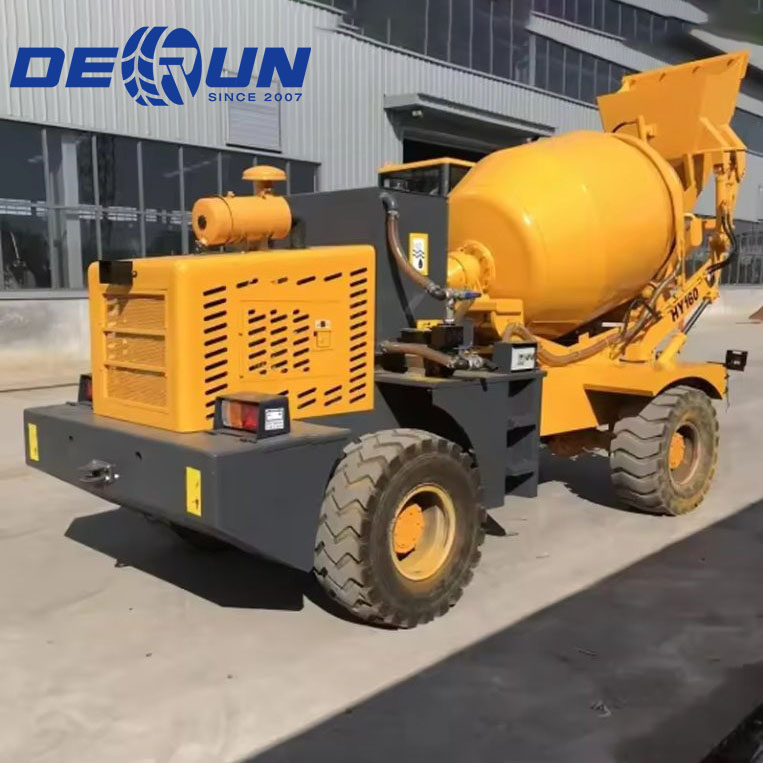
Table of Contents
- What Is a Self-Loading Concrete Mixer Truck?
- How Does the Rotary Drum Mixing System Work?
- Key Specifications and Technical Overview
- What Are the Main Operational Advantages?
- Where Can This Mixer Truck Be Used?
- What Should Buyers Evaluate Before Purchasing?
- Maintenance Practices for Reliable Operation
- Frequently Asked Questions
- Conclusion: Choosing a Suitable Concrete Mixing Solution
1. What Is a Self-Loading Concrete Mixer Truck?
A self-loading concrete mixer truck integrates several essential concrete production functions into one vehicle. Instead of relying entirely on a separate loader, fixed batching plant, and concrete transport truck, operators can use the integrated equipment to load aggregates, introduce measured ingredients, mix concrete, and transport the mixture around the project site.
The Luzun 3cbm Self Loading Concrete Mixer Light Truck with Rotary Drum is intended for construction environments where flexibility and on-site concrete preparation are important. Its mobile configuration is particularly useful when work locations are dispersed, access roads are narrow, or the required concrete volume does not justify installing a permanent batching facility.
For contractors, the principal benefit is operational integration. Fewer separate machines may simplify coordination, reduce material handling, and make it easier to supply concrete to foundations, access roads, drainage structures, and other small-scale construction areas.
However, actual productivity depends on the material loading cycle, mixing time, travel distance, concrete mix design, operator experience, and site conditions. Buyers should evaluate these factors rather than relying on rated drum capacity alone.
2. How Does the Rotary Drum Mixing System Work?
The rotary drum is the central component responsible for combining cement, aggregates, water, and approved admixtures into a workable concrete mixture. Together with the loading and water supply systems, it supports a coordinated production cycle.
Step 1: Load Raw Materials
The integrated hydraulic loading arm collects aggregates such as sand and gravel and transfers them into the mixing drum. According to the product information, the loading mechanism incorporates an automatic weighing sensor to support material measurement.
Step 2: Measure and Add Ingredients
Cement, aggregates, water, and any specified admixtures must be introduced according to the approved mix design. The equipment's weighing and water supply systems assist with batching, while operators should verify calibration and ingredient quantities before production.
Step 3: Mix the Concrete
As the drum rotates, its internal spiral blades move the ingredients through the mixing chamber. Proper mixing helps distribute cement paste and aggregates throughout the batch. Mixing duration and drum operation should follow the manufacturer's instructions and the requirements of the selected concrete mix.
Step 4: Transport and Discharge
The vehicle moves the prepared concrete to the placement area, where the mixture is discharged for the next construction operation. Keeping production close to the pouring location can help reduce unnecessary transportation and scheduling delays.
For further equipment options, buyers can explore Derun construction machinery to compare solutions for different project requirements.
3. Key Specifications and Technical Overview
Technical specifications help buyers determine whether a mixer truck can meet their requirements for output, mobility, loading, and site operation. The following table summarizes the principal information published on the product page.
| Specification | Published Information | Operational Relevance |
|---|---|---|
| Product category | Self-loading concrete mixer light truck | Combines loading, mixing, and transportation functions |
| Engine model | JBC5500 | Identifies the listed diesel powertrain configuration |
| Engine displacement | 4,330 cc | Provides a reference for engine configuration |
| Maximum engine power | 85 kW (116 HP) | Supports assessment of operating and mobility requirements |
| Maximum torque | 390 Nm at 2,800 rpm | Relevant to power delivery under operating loads |
| Drive configuration | 4 × 4 four-wheel drive | Supports mobility on suitable challenging job-site terrain |
| Drum geometric capacity | 5,445 liters | Indicates the geometric volume of the mixing drum |
| Concrete output | Listed as 3.5 m³ per batch | Confirm rated output for the exact ordered configuration |
| Drum rotation speed | 16 rpm | Provides a reference for the listed mixing system |
| Loading arm capacity | 600 liters | Relevant to aggregate loading cycles |
| Water pump maximum flow | 90 liters/minute | Supports water supply planning, subject to actual conditions |
| Fuel tank capacity | 190 liters | Useful for fuel planning and operating logistics |
| Operating weight | Listed as 8,500 kg | Relevant to transport, access, and ground-bearing assessments |
Important specification note: The product title uses “3cbm,” while the published specification identifies the product as a 3.5-cubic-meter self-loading mixer and lists concrete output of 3.5 m³ per tank. The drum's geometric volume is not the same as its rated concrete output. Buyers should request written confirmation of the exact model, effective output per batch, payload, and configuration before placing an order.
4. What Are the Main Operational Advantages?
Integrated Material Handling
The loading arm reduces the need to coordinate a separate loading machine for routine aggregate feeding. This can be valuable on smaller projects where equipment availability and labor scheduling directly affect productivity.
Flexible On-Site Concrete Production
With loading, mixing, and transport functions combined, the truck can prepare concrete near different work areas. This is particularly useful for projects that involve multiple small pours rather than one centralized pouring location.
Four-Wheel-Drive Mobility
The listed 4 × 4 configuration is designed to support movement across suitable uneven or demanding construction terrain. Nevertheless, actual access depends on ground bearing capacity, gradients, mud, tire conditions, vehicle dimensions, and operating limits.
Integrated Water Supply
The self-priming water pump and associated water supply components support the concrete preparation process. Reliable water measurement remains essential because an incorrect water-to-cement ratio can affect workability, strength, and durability.
Potential Equipment and Labor Savings
Combining multiple functions may reduce the number of separate machines required for certain projects. The actual savings depend on utilization, maintenance expenses, fuel consumption, transport distances, operator availability, and the cost of alternative concrete supply arrangements.
5. Where Can This Mixer Truck Be Used?
The Luzun self-loading mixer is particularly relevant to projects that need mobile concrete preparation and relatively flexible batch delivery.
- Rural road construction: Preparing concrete for road sections, roadside drainage, and small access infrastructure.
- Residential construction: Supplying concrete for foundations, small slabs, pathways, and other suitable building work.
- Municipal engineering: Supporting localized repairs, pedestrian areas, drainage improvements, and minor public works.
- Agricultural facilities: Preparing concrete for irrigation structures, farm yards, livestock facilities, and equipment foundations.
- Remote construction sites: Reducing dependence on a nearby fixed batching plant when site access and logistics make conventional supply difficult.
- Emergency reconstruction: Supporting concrete supply for suitable repair and rebuilding tasks after disruptive events.
Before deployment, contractors should assess road access, turning space, soil conditions, concrete placement requirements, and the availability of cement, aggregates, and water. Projects requiring continuous high-volume output may be better served by a centralized batching plant and dedicated mixer fleet.
6. What Should Buyers Evaluate Before Purchasing?
Selecting a self-loading mixer truck requires more than comparing advertised capacity or engine power. A practical evaluation should cover the complete production cycle and the conditions in which the vehicle will operate.
- Confirm effective batch output. Ask for the rated finished-concrete volume per batch and distinguish it from the drum's geometric capacity.
- Calculate daily demand. Estimate the required concrete volume, average cycle time, and number of batches needed per shift.
- Assess site conditions. Check gradients, soil stability, access width, turning radius, and ground clearance requirements.
- Verify batching accuracy. Request information about weighing sensor calibration, water measurement, and the available control functions.
- Review serviceability. Confirm spare-parts availability, routine maintenance requirements, technical support, and warranty coverage.
- Calculate total operating cost. Consider fuel, labor, maintenance, consumables, transportation, and expected equipment utilization.
- Check transport and compliance requirements. Confirm vehicle dimensions, gross weight, axle loads, road-registration requirements, and applicable local regulations.
International buyers should also confirm the delivery scope, export documentation, payment terms, lead time, and availability of operator training before finalizing their purchase.
7. Maintenance Practices for Reliable Operation
Consistent maintenance helps protect equipment availability and supports dependable concrete production. The maintenance schedule supplied by the manufacturer should take priority over generic intervals.
- Inspect hydraulic hoses, fittings, cylinders, and visible connections for leaks or damage.
- Check engine oil, coolant, fuel, and hydraulic fluid according to the prescribed service schedule.
- Clean the mixing drum and discharge components promptly after use to prevent hardened concrete buildup.
- Inspect drum blades and wear surfaces for damage or excessive abrasion.
- Verify the operation of weighing sensors and water measurement equipment at the recommended intervals.
- Check tires, brakes, steering, lights, and other safety-critical components before operation.
- Train operators in safe loading, driving, mixing, discharge, and lockout procedures.
Cleaning and servicing should be performed using approved procedures, with the machine secured and hazardous energy isolated where required. Never enter a mixing drum or work beneath raised equipment without the manufacturer's specified safeguards.
8. Frequently Asked Questions
1. What does a self-loading concrete mixer truck do?
A self-loading concrete mixer truck combines material loading, batching, mixing, and transportation in one mobile machine. It is intended to simplify concrete production at construction sites where separate equipment or a fixed batching plant may be inconvenient.
2. What is the concrete output of the Luzun mixer?
The referenced product page lists a concrete output of 3.5 cubic meters per batch, although the product title uses “3cbm.” Buyers should confirm the exact model designation and rated effective output with Derun before ordering.
3. Can this mixer operate on uneven construction terrain?
The listed four-wheel-drive configuration is intended to support mobility on suitable challenging terrain. Safe operation still depends on slope limits, soil stability, tire condition, load distribution, and the manufacturer's operating instructions.
4. How does the rotary drum contribute to concrete quality?
The rotating drum and internal spiral blades move and combine the ingredients to produce a more uniform mixture. Final concrete quality also depends on the approved mix design, accurate batching, aggregate properties, mixing duration, and proper placement and curing.
5. What information should I request from a supplier before buying?
Request the confirmed model specification, rated concrete output, engine and drive configuration, dimensions, weight data, batching accuracy, warranty terms, spare-parts arrangements, delivery schedule, and technical support details. Ask for written clarification of any inconsistent capacity figures.
9. Conclusion: Choosing a Suitable Concrete Mixing Solution
The Luzun 3cbm Self Loading Concrete Mixer Light Truck with Rotary Drum offers an integrated approach to concrete loading, mixing, and delivery for projects that value mobility and flexible on-site production. Its loading arm, rotary drum, water supply system, and four-wheel-drive configuration make it a potential option for rural infrastructure, residential construction, agricultural facilities, and dispersed small-scale projects.
The best purchasing decision comes from matching the machine's verified production capacity, site accessibility, operating costs, and maintenance support to actual project demands. Contractors should confirm the final technical configuration and effective batch output before comparing quotations.
If you are looking for a practical concrete mixing solution for your construction projects, Derun can help you review the relevant equipment specifications and purchasing requirements. Visit the Luzun self-loading concrete mixer product page for more information, and contact us to discuss your application, confirm the available configuration, and request a quotation tailored to your project needs.
Send Inquiry



X
We use cookies to offer you a better browsing experience, analyze site traffic and personalize content. By using this site, you agree to our use of cookies.
Privacy Policy