Article Summary
Fuel tank trailers are vital in the logistics and fuel supply chain, enabling safe, efficient, and cost-effective fuel transportation.
This article explores the key features, operational benefits, safety considerations, and maintenance tips for fuel tank trailers, helping business owners and logistics managers make informed decisions.
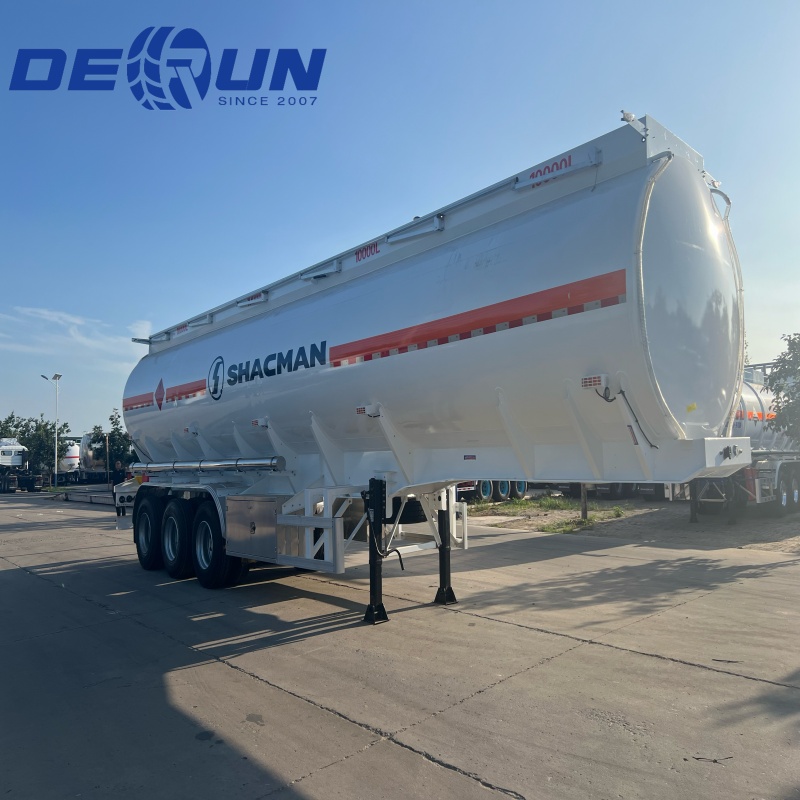
What is a Fuel Tank Trailer?
A fuel tank trailer is a specialized vehicle designed to transport liquid fuels such as gasoline, diesel, and kerosene safely over long distances.
These trailers come in various capacities, typically ranging from 10,000 liters to 50,000 liters, and are equipped with safety features to prevent leaks, spills, and contamination.
-
Material: Usually made from stainless steel or aluminum for durability.
-
Compartments: Single or multiple compartments to transport different fuels simultaneously.
-
Design: Streamlined for road stability and fuel efficiency.
Key Features of Fuel Tank Trailers
Modern fuel tank trailers are engineered for efficiency and safety. Some essential features include:
|
Feature
|
Description
|
|
Corrosion-Resistant Tank
|
Constructed from materials that prevent fuel contamination and corrosion over time.
|
|
Multiple Compartments
|
Allows transporting different types of fuel safely and efficiently.
|
|
Safety Valves
|
Prevents over-pressurization and potential accidents.
|
|
Advanced Suspension
|
Enhances stability and reduces wear during transport.
|
|
Easy Loading & Unloading
|
Equipped with pumps and hoses for smooth fuel transfer.
|
Benefits of Using Fuel Tank Trailers
-
Cost Efficiency: Transport large quantities of fuel in a single trip, reducing logistics costs.
-
Time-Saving: Fast loading/unloading systems minimize downtime.
-
Safety Assurance: Equipped with leak-proof and pressure-control mechanisms.
-
Operational Flexibility: Suitable for highways, rural roads, and industrial sites.
-
Environmental Protection: Reduces fuel spills and environmental hazards.
Safety Considerations
Ensuring safety during fuel transportation is critical. Operators must consider:
-
Regular inspection of valves, hoses, and compartments.
-
Driver training for handling hazardous fuels.
-
Emergency response plan for spills or accidents.
-
Compliance with local transportation and environmental regulations.
Maintenance Tips for Fuel Tank Trailers
Proper maintenance ensures longevity and safe operation:
-
Clean the tank regularly to prevent residue buildup.
-
Inspect and replace worn-out seals, hoses, and gaskets.
-
Lubricate moving parts such as valves and pumps periodically.
-
Check tire pressure and suspension system for road stability.
-
Schedule professional inspections at least twice a year.
Frequently Asked Questions
Q1: What fuels can a fuel tank trailer carry?
A1: Gasoline, diesel, kerosene, and other compatible liquid fuels.
Q2: How many compartments can a trailer have?
A2: Typically between 1 to 4 compartments, depending on the trailer size and customer needs.
Q3: How often should the trailer be inspected?
A3: Routine inspections are recommended every 3-6 months, with professional inspections twice a year.
Q4: Are fuel tank trailers suitable for long-distance transport?
A4: Yes, they are specifically designed for safe long-distance transportation.